
Courses
Teaching the fundamentals of organismal biology while centering our values of growth, compassion, and expanding access to science.
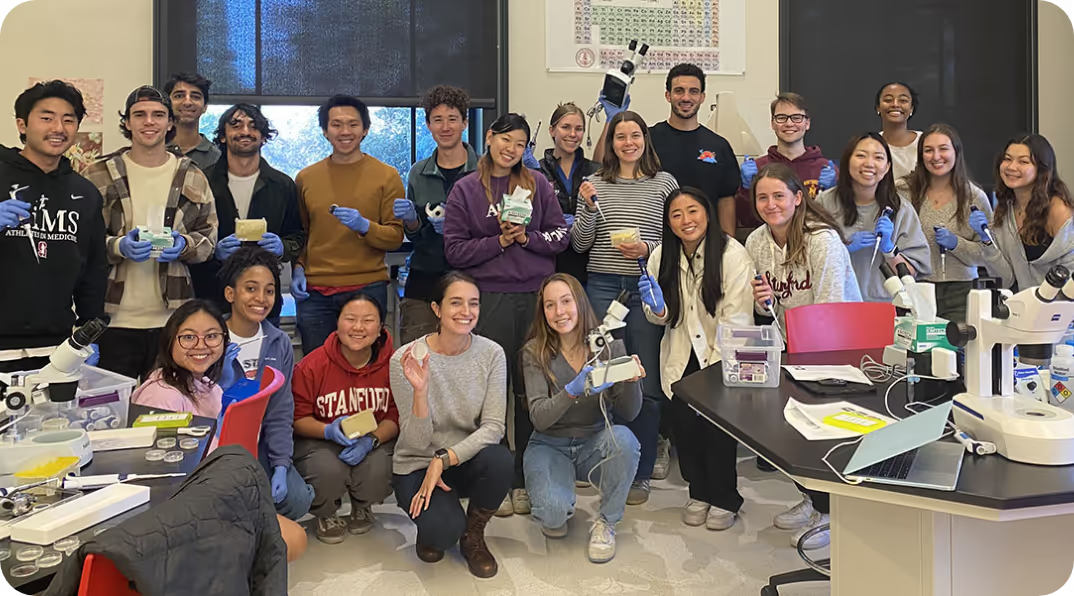
BIO161 Organismal Biology Lab
Our goal is to provide genuine research experiences for undergraduates while nurturing a love for organismal biology, affirming their ability to succeed in the laboratory, and equalizing access to authentic research experiences.
Learning Goals
Apply critical thinking to a scientific question
Develop analytical skills to quantify and analyze phenotypic data
Communicate the process of science and discoveries made
Gain practical skills useful in the scientific workforce
Course Publications
Abdelghne BJ, Zreik ZK, Carter AN, Aguilar GK, Morales G, Ramirez D, Bradon N, Golde CL, O’Connell LA. 2026. Tobacco extract is a chemotaxis repellent for C. elegans. microPublication Biology. DOI: 10.17912/micropub.biology.002188

Jansari V, Castro-Martinez DA, Dailey MJ, Roti O, Seibert MR, Abdelghne BJ, Aguilar GK, Amine A, Ben-Efraim K, Carolan RE, Carter AN, Chang M, Dye NJ, Le CA, Melian M, Nakamura KC, Nemawarkar R, Nguyen AT, Ong J, Saigal K, Sosa HM, Vo LT, Wu SH, Zreik ZK, Morales G, Kuznetsov H, Ramirez D, Pamplona-Barbosa M, Lacey MP, Bradon N, Golde CL, O’Connell LA. 2026. Four Neotropical frog species exhibit shared and distinct skin bacterialcommunities in a laboratory setting. microPublication Biology. DOI: 10.17912/micropub.biology.002080
Wu SH , Amine A,Ben-Efraim K, Dye NJ, Melian M, Nakamura KC, Nemawarkar R, Saigal K, Sosa HM, Vo LT, Abdelghne BJ, Aguilar GK, Carolan RE, Carter AN, Castro-Martinez DA, Chang M, Dailey MJ, Jansari V, Le CA, Nguyen AT, Ong J, Roti O, Seibert MR, Zreik ZK, Morales G, Ramirez D, Bradon N, Golde CL, O’Connell LA. 2026. Bay leaf extract is a chemotaxis repellent for C. elegans. microPublication Biology. DOI: 10.17912/micropub.biology.002023
Gaerlan M, Carrillo M, Ceva S, Chundi S, DialloB, Fong JN, Huang K, Jackson J, Padilla J, Quintana L, Santa Maria K, SarkisianSM, Sequeira PR, Tatlock EU, Baker PR, Bachmann L, Park S, Perez MJ, Phipps ME, Nair Sharma S, Soto-Hernandez Y, Juarez BH, Mena C, Morales G, Gonzalez M,Fiocca K, Bradon N, Madrzyk M, O'Connell LA. 2025. Velvety tree ant extract is a chemotaxis repellent for C. elegans. microPublicationBiology.10.17912/micropub.biology.001531
Phipps ME, Baker PR, Bachmann L, Park S, PerezMJ, Nair Sharma S, Soto-Hernandez Y, Gaerlan M, Carrillo M, Ceva S, Chundi S,Diallo B, Fong JN, Huang K, Jackson J, Padilla J, Quintana L, Santa Maria K,Sarkisian SM, Sequeira PR, Tatlock EU, Juarez BH, Akbari N, Madrzyk M, O'Connell LA. 2025. Olfactory cues elicit species-specific locomotive responses in poison frog tadpoles. microPublicationBiology. DOI: 10.17912/micropub.biology.001532
Ellington CT*, Hayden AJ*, LaGrange ZB*, Luccioni MD*, Osman MAM*, Ramlan LIE*, Vogt MA*, Guha S, Goodman MB, O’Connell LA. 2020. The plant terpenoid carvone is a chemotaxis repellent for C. elegans. microPublication Biology. DOI: 10.17912/micropub.biology.000231
Alfonso SA*, Arango Sumano D*, Bhatt DA*, Cullen AB*, Hajian CM*, Huang W, Jaeger EL, Li E, Maske AK, Offenberg EG, Ta V, Whiting WW, Adebogun GT, Bachmann AE, Callan AA, Khan U, Lewis AR, Pollock AC, Ramirez D, Bradon N, Fiocca K, Cote LE, Allee MD, McKinney JE, O’Connell LA. 2023. Argentine ant extract induces an osm-9 dependent chemotaxis response in C. elegans. micropublication Biology. DOI: 10.17912/micropub.biology.000745
Lopez JS*, Ali S*, Asher M*, Benjamin CA*, Brennan RT*, Burke MLT*, Civantos JM*, DeJesus EA*, Geller A*, Guo MY*, Haase Cox SK*, Johannsen JM*, Kang JSJ*, Konsker HB*, Liu BC*, Oakes KG*, Park HI*, Perez DR*, Sajjadian AM*, Torio Salem M*, Sato J*, Zeng AI*, Juarez BH, Gonzalez M, Morales G, Braden N, Fiocca K, Pamplona Barbosa MM, O’Connell LA. 2024. Pavement ant extract is a chemotaxis repellent for C. elegans. micropublicationBiology. DOI: 10.17912/micropub.biology.001146
Adebogun GT*, Bachmann AE*, Callan AA*, Khan U*, Lewis AR*, Pollock AC*, Alfonso SA, Arango Sumano D, Bhatt DA, Cullen AB, Hajian CM, Huang W, Jaeger EL, Li E, Maske AK, Offenberg EG, Ta V, Whiting WW, McKinney JE, Butler J, O’Connell LA. 2023. Albino Xenopus laevis tadpoles prefer dark environments compared to wild type. microPublication Biology. DOI: 10.17912/micropub.biology.000750

Lauren is amazing! She truly cares about every student as a person. I can't recommend this course enough. One of the best classes I've taken at Stanford.
Dr. O'Connell is the BEST!!! If you have the chance to take the course, please do. I honestly do not think I have had another professor care so deeply about every student individually as much as Dr.O'Connell does. She goes ABOVE AND BEYOND! I highly recommend the course for anyone interested!
Take this!! Dr. O'Connell is an incredible lab instructor – she's very helpful in supporting students at any experience level and in providing very helpful feedback when we worked on our own special projects/final journal articles. You become a master of doing these experiments, and it's cool that you get to work with a group while also learning a ton on your own. It's also fun that the research you do in class gets published at the end, and you even get the chance to publish your own special project with your group if you want to! I learned a lot and came out of this class with great friends. 1000% recommend.
Such a great class; Professor O'Connell is very invested in student success and provides an immense amount of support to students. The class is a real research experience and provides you with many invaluable skills. I highly recommend.
TAKE IT!! Professor O'Connell is incredible and the whole teaching team is so much fun. She genuinely cares about you and wants you to succeed in the world of research and beyond. Totally worth taking! Amazing experience.
This is one of the best courses I've taken at Stanford. Professor O'Connell is so friendly and an amazing teacher. The course is fun, you learn a ton, the workload is very manageable, and you get published at the end! /lit"
This class is AMAZING & Dr. O'Connell is the best and actually cares about her students. As a senior, this is really the first teacher I have had that cares about your learning - not just the grade. I think this class is a must and you will learn a ton about the true scientific process from start to finish (and all the little problems in between)!
Amazing class! Really pushes you to think about scientific experimental design in a fun environment. Teaching team is fabulous and the community they build is really cool.
BIO159 Herpetology
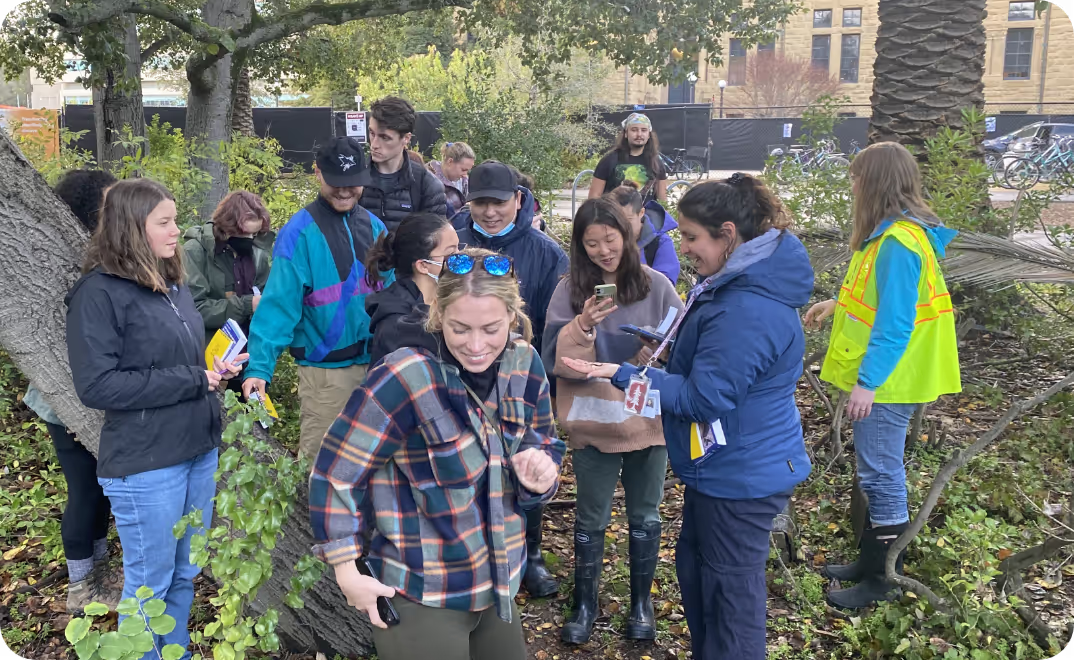
Our goal is to provide hands-on field and lab research experiences that center student investment in the local community and gain skills useful for scientific and conservation employment. This course is co-taught by Dr. Esther Cole Adelsheim in collaboration with the Stanford Conservation Program.
Learning Goals
Identify common local amphibians and reptiles by recognizing major anatomical features.
Relate reptile and amphibian biology and role in ecosystems to the actions of individuals and communities to support conservation and management practices.
Explain basic evolutionary and ecological concepts relating to amphibian and reptile diversity and natural history through a team-based final project.
Gain skills required for field surveys and laboratory research using amphibians or reptiles.
Invest in curiosity about the natural world and its relationship to people.
Products
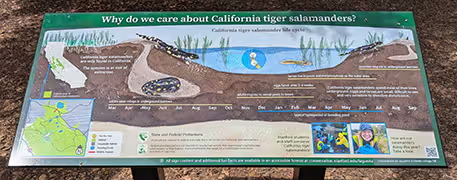
As part of this course, students wrote a herpetological survey report for the local Stanford community. Students also started efforts to put up signage around the Stanford campus that informed community members about local reptile and amphibian wildlife.
This class is perfect for those interested in herps specifically, or even those interested in biology/ecology in general. The teaching staff are great, the assignments are light, and the learning is almost entirely experiential in the field and in the lab. It was a blast, I learned a lot, and I got to encounter a bunch of cool salamanders, lizards, toads, and snakes!
Take this class! It's such a great opportunity to learn about wildlife from many perspectives: conservation, natural history, experimental biology. You will survey local reptiles and amphibians around campus, study tropical species in lab, and acquire the tools and knowledge to explore herps on your own time!
This class is incredible and you should absolutely take it. The teaching team is passionate and nurtures student learning, which produces passionate students as well. This course is designed to make students succeed and was maybe my all-time favorite class!
BIO84 Physiology
Physiology is one of the largest Foundations courses for the biology major at Stanford. The goal of this course is to provide an overview of animal physiology, including how organisms maintain homeostasis, respond to environmental cues, and coordinate behaviors across multiple tissues and organ systems. This course is co-taught by Prof Lauren O’Connell and Prof Craig Heller.
Learning Goals
Describe the structure and function of physiological systems (reproductive, digestive, urinary, respiratory, and cardiovascular) and how they are controlled and regulated.
Understand the basis of neural and hormonal informational systems and the roles they play in responding to internal and external challenges to control and regulate the physiology and behavior of animals.
Apply principles of physiological systems to real world clinical and ecological challenges.
Design and interpret physiological experiments that test hypotheses about how organisms function.
I struggled with biology in high school, so I am astonished by the depth of my understanding of each of the body systems we discussed throughout the quarter, and it would not have been possible without Dr. O'Connell's incredible teaching style. Her detailed narrative notes provide a perfect level of preparation for each of her lectures, and her unique use of illustrations during lectures allows students to follow along at a realistic pace. Furthermore, she is very receptive to student feedback, and she made tangible adjustments to the structure of lectures (keeping illustrations, including PollEV questions) after reading midquarter surveys that enhanced my learning.
Professor O'Connell's lectures made complicated topics simple! Her method of teaching through drawing really helped me learn the content.
This class is AMAZING. The professors are passionate and engaging. The content has so many applications to the world we see every day. Almost every lecture had me on the edge of my seat.